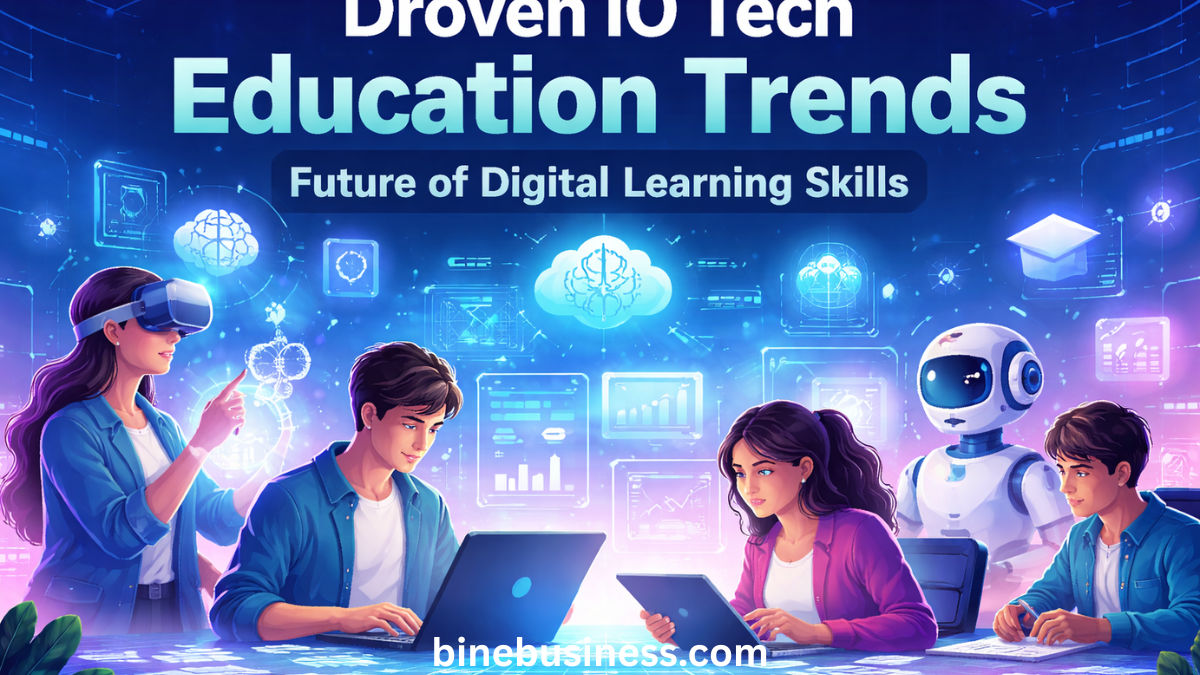
The droven io tech education trends world of education is undergoing a rapid transformation driven by digital innovation, automation, and artificial intelligence. At the center of this shift are droven io tech education trends, which represent the evolving relationship between technology and modern learning systems. These trends are reshaping how knowledge is delivered, consumed, and applied across academic institutions and professional training environments.
Traditional classrooms are no longer the only hub for learning. Instead, digital platforms, cloud-based tools, and interactive systems are redefining how students engage with content. The rise of smart devices, high-speed internet, and on-demand learning resources has made education more accessible and flexible than ever before. As a result, learners are no longer restricted by geography or rigid schedules.
Another key aspect of this transformation is personalization. Modern education systems are increasingly tailored to individual learning styles, ensuring better understanding and retention. Droven IO tech education trends highlight how technology is bridging gaps between students, educators, and industries by making learning more dynamic and outcome-focused.
Evolution of Tech Education in the Digital Era
Droven io tech education trends has come a long way from traditional chalk-and-board teaching methods. Over the past decade, digital transformation has completely reshaped the educational landscape. Online learning platforms, virtual classrooms, and cloud-based collaboration tools have become essential components of modern education systems.
One major development in this evolution is the shift from static learning materials to interactive content. Videos, simulations, quizzes, and gamified lessons now replace long textbooks in many learning environments. This not only improves engagement but also helps students grasp complex technical concepts more effectively.
Additionally, globalization has played a major role in expanding access to education. Students from different parts of the world can now enroll in top-quality courses without physically attending institutions. This democratization of education is one of the most important outcomes of digital learning evolution, making tech education more inclusive and scalable.
Key Droven IO Tech Education Trends Shaping the Industry
Several powerful innovations define droven io tech education trends, each contributing to a smarter and more efficient learning ecosystem. One of the most significant trends is AI-powered personalized learning. Artificial intelligence helps analyze student behavior, strengths, and weaknesses to create customized learning paths.
Gamification is another major trend transforming education. By incorporating game-like elements such as points, levels, and rewards, learning becomes more engaging and motivating. This approach encourages students to stay consistent and actively participate in their learning journey.
Microlearning has also gained popularity, focusing on short and focused learning modules. Instead of overwhelming learners with large volumes of information, microlearning breaks content into manageable chunks, making it easier to absorb and retain knowledge. Virtual labs and simulation-based training are also revolutionizing technical education by offering hands-on experience without physical infrastructure limitations.
Role of Artificial Intelligence and Automation in Education
Artificial intelligence is one of the most powerful forces driving modern education trends. Within droven io tech education trends, AI plays a central role in reshaping how learning is delivered and managed. Intelligent tutoring systems can now provide real-time feedback, helping students understand concepts instantly.
Automation is also improving efficiency in educational institutions. Tasks such as grading assignments, tracking attendance, and analyzing performance data can now be handled automatically, allowing educators to focus more on teaching and mentorship. This reduces workload and improves overall productivity.
AI-powered chatbots and virtual assistants are becoming common in digital classrooms. They help answer student queries, guide learning paths, and provide 24/7 academic support. Predictive analytics further enhances learning by identifying struggling students early and suggesting targeted interventions.
Emerging Technologies Driving Educational Transformation
The rapid growth of emerging technologies is another key factor shaping droven io tech education trends. Virtual Reality (VR) and Augmented Reality (AR) are creating immersive learning environments where students can interact with 3D models and real-world simulations.
Cloud computing has made education more scalable and accessible by allowing institutions to store and share learning resources online. This ensures students can access their materials anytime and from anywhere in the world.
The Internet of Things (IoT) is also making classrooms smarter by connecting devices and enabling real-time data exchange. Meanwhile, mobile-first learning platforms ensure that education is accessible on smartphones, making learning truly portable and flexible.
Impact of Droven IO Tech Education Trends on Students and Educators
The impact of these trends on students and educators is profound. For students, droven io tech education trends provide greater flexibility, accessibility, and personalization. Learners can study at their own pace, revisit complex topics, and choose learning formats that suit their preferences.
Educators, on the other hand, are transitioning from traditional lecturers to facilitators and mentors. Instead of focusing solely on delivering content, they now guide students through interactive and technology-driven learning experiences.
Collaboration has also improved significantly. Digital platforms enable students and teachers from different parts of the world to connect, share knowledge, and work together on projects. However, challenges like unequal access to technology still need to be addressed to ensure fair opportunities for all learners.
Challenges and Limitations in Tech Education Trends
Despite its advantages, droven io tech education trends also face several challenges. One of the biggest concerns is data privacy and cybersecurity. As more student information is stored online, protecting sensitive data becomes a critical priority.
Another challenge is the digital divide. Not all students have access to high-speed internet or modern devices, especially in developing regions. This creates inequality in educational opportunities.
There is also resistance to change among some educators and institutions. Transitioning from traditional teaching methods to advanced digital systems requires training, resources, and mindset shifts. Additionally, over-reliance on automation can sometimes reduce the human touch in education, which remains essential for effective learning.
Future Predictions of Tech Education Trends
The future of droven io tech education trends is highly promising and innovation-driven. One major prediction is the rise of fully AI-powered education systems that adapt in real time to each learner’s needs.
Metaverse-based classrooms are also expected to become more common, offering fully immersive virtual learning environments. These spaces will allow students to interact, collaborate, and learn in ways that closely mimic real-world experiences.
Another major shift will be toward skill-based education rather than traditional degree-focused systems. Employers are increasingly valuing practical skills over academic qualifications, making hands-on learning more important than ever.
Lifelong learning will also become the norm, with individuals continuously upgrading their skills throughout their careers. The integration of AI and human instruction will create hybrid learning ecosystems that balance automation with personal guidance.
Conclusion
In conclusion, droven io tech education trends represent a powerful shift in how education is delivered and experienced. From AI-driven personalization to immersive virtual learning environments, these trends are redefining the future of education.
As technology continues to evolve, learners and educators must adapt to stay relevant in a rapidly changing world. Embracing these innovations will not only improve learning outcomes but also prepare individuals for the demands of the modern workforce.
The future of education is digital, flexible, and deeply connected to technological advancement, making it essential for institutions and learners to evolve alongside it.