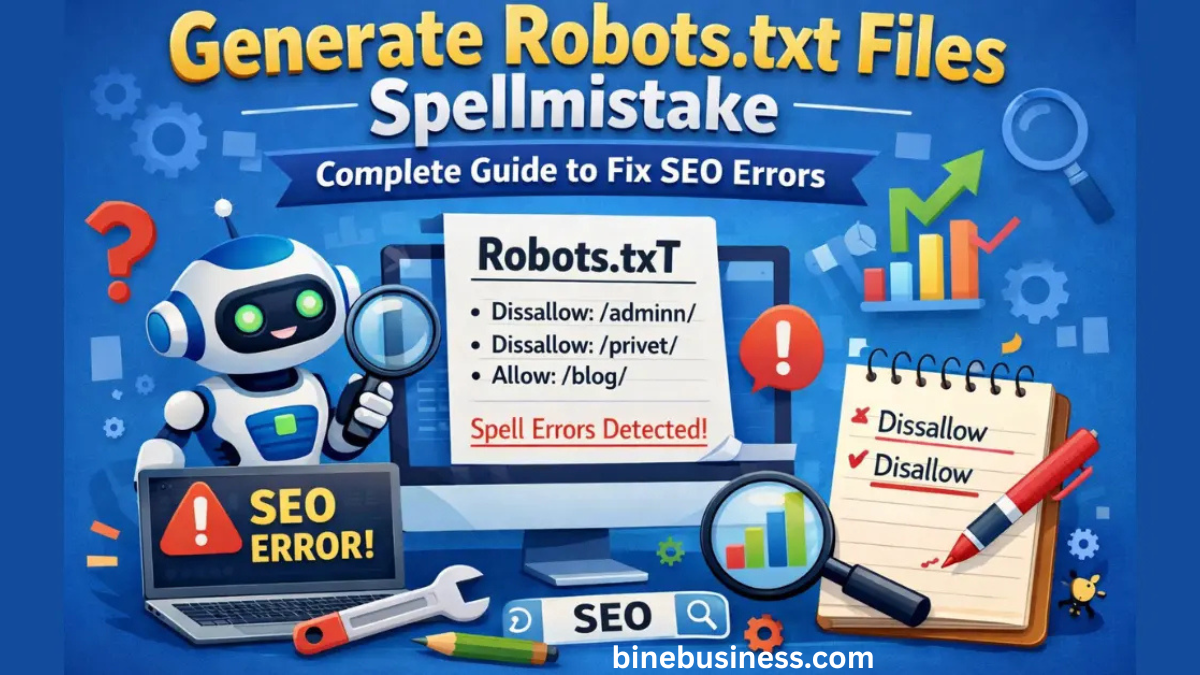
A generate robots.txt files spellmistake file is one of the most important yet often misunderstood elements of technical SEO. It acts like a set of instructions for search engine crawlers, telling them which parts of your website they are allowed or not allowed to access. When used correctly, it helps improve crawl efficiency, protect sensitive pages, and support better indexing. However, even a small spelling mistake or syntax error in a robots.txt file can lead to serious SEO issues.
The keyword “generate robots.txt files spellmistake” reflects a common problem faced by beginners and even experienced webmasters—errors while creating or generating robots.txt files. These mistakes may look minor, but search engines are very strict about syntax. A single incorrect character can cause search engines to ignore the file completely generate robots.txt files spellmistake.
This article explores what robots.txt files are, why spelling mistakes matter, common errors users make, and how to properly generate and validate robots.txt files for better SEO performance generate robots.txt files spellmistake.
Understanding generate robots.txt files spellmistake

Generate robots.txt files spellmistake is a simple text file placed in the root directory of a website. Its main purpose is to communicate with search engine bots such as Googlebot and Bingbot. It tells them which pages or sections of the site should or should not be crawled generate robots.txt files spellmistake.
Search engines rely on this file before they crawl a website. When a bot visits a site, it first checks the robots.txt file. If the file contains clear instructions, the bot follows them. For example, a website owner may want to block admin pages, duplicate content, or private directories from being crawled generate robots.txt files spellmistake.
The file uses simple directives such as “User-agent,” “Disallow,” and “Allow.” Each directive must be written correctly, or search engines may misinterpret the rules. Unlike human readers, search engine bots do not guess intentions. They strictly follow syntax.
Another important point is placement. The robots.txt file must always be located at the root of the domain (example: www.website.com/robots.txt). If placed incorrectly or written with errors, search engines may ignore it entirely, leading to unwanted indexing or wasted crawl budget.
What Does “Generate Robots.txt Files Spellmistake” Mean?
The phrase “generate robots.txt files spellmistake” refers to a common SEO issue where users incorrectly write or generate robots.txt files due to spelling or syntax errors. These mistakes often happen when beginners manually create the file or use poorly designed generators.
Spelling mistakes in robots.txt files are not just about typos in general words—they often involve critical directives. For example, writing “Useragen” instead of “User-agent” or “Disalow” instead of “Disallow” can make the rule invalid. Since search engines do not recognize incorrect syntax, the rule simply gets ignored.
These errors can lead to serious consequences. A website might unintentionally block important pages from being crawled, or worse, allow sensitive pages to be indexed publicly. This can damage SEO performance, reduce visibility, and affect rankings.
Generate robots.txt files spellmistake Understanding this keyword is important because it highlights a real-world SEO challenge: automation tools and human error can both introduce mistakes. That is why learning proper structure and validation is essential when generating robots.txt files.
Common Spelling and Syntax Mistakes in Robots.txt Files
One of the most frequent issues in robots.txt files is misspelling key directives. Words like “User-agent,” “Disallow,” and “Allow” must be written exactly as defined. Even small changes like missing hyphens or incorrect capitalization can break the rule.
Another common mistake is incorrect formatting. Robots.txt is very strict about structure. Each directive must be placed on a new line. Missing line breaks or combining multiple rules into one line can confuse search engine bots.
Path-related errors are also common. For example, writing “/admin/” incorrectly as “admin/” or adding unnecessary spaces can lead to unexpected crawling behavior. Similarly, forgetting the leading slash can make the rule ineffective generate robots.txt files spellmistake.
Some users also mistakenly use unsupported commands. Robots.txt does not support advanced programming logic, yet beginners sometimes try to add conditions or scripts, which are ignored by search engines generate robots.txt files spellmistake.
These mistakes may look small, but they can have a large impact on SEO performance. A single incorrect line can block entire sections of a website or expose restricted content.
How to Generate Robots.txt Files Correctly
Creating a proper robots.txt file requires attention to detail. The first step is identifying which parts of your website should be accessible to search engines and which should be restricted. This planning stage is crucial for SEO success.
Next, the file should be written using correct syntax. Each rule should begin with “User-agent,” followed by “Allow” or “Disallow” directives. For example, if you want to block an admin folder, you would clearly define it using proper formatting.
It is also important to keep the file simple. Overcomplicating robots.txt with too many rules increases the risk of errors. A clean and minimal structure is often more effective and safer for SEO.
Finally, always place the file in the root directory of your domain. Search engines only recognize robots.txt when it is placed in the correct location.
Tools to Generate Robots.txt Files Without Mistakes
There are many tools available today that help users generate robots.txt files automatically. These tools are especially useful for beginners who may not be familiar with syntax rules.
Online robots.txt generators allow users to select options through a simple interface. The tool then creates a ready-to-use file without spelling or formatting mistakes. This reduces human error significantly.
Content management systems like WordPress also offer plugins that automatically generate and manage robots.txt files. These plugins often include SEO optimization features and built-in validation.
However, manual creation still has advantages. It gives full control over rules and ensures that advanced SEO strategies can be implemented properly. The best approach is often a combination of both automation and manual review.
Testing and Validating Robots.txt Files
After creating a robots.txt file, testing is extremely important. Even a small spelling mistake can cause unexpected behavior, so validation tools should always be used.
Google Search Console provides a robots.txt testing tool that helps identify errors and simulate how search engines interpret your file. This allows you to fix issues before they affect your website.
Regular monitoring is also important. Websites change over time, and new pages may need updated rules. Without proper maintenance, old robots.txt files can become outdated and harmful to SEO.
SEO Best Practices for Robots.txt Files
A well-optimized robots.txt file should only block unnecessary or sensitive content. Blocking important pages by mistake can harm rankings and visibility.
It is also important to understand that robots.txt does not guarantee privacy. It only instructs crawlers, but does not secure data. Sensitive information should be protected through proper authentication systems.
Another best practice is keeping the file updated. As your website grows, your crawling needs will change. Regular updates ensure search engines always access the right content.
Conclusion
Robots.txt files play a crucial role in controlling how search engines interact with your website. However, even small spelling or syntax mistakes can create major SEO problems. Understanding how to correctly generate and manage these files is essential for maintaining strong website performance.
By avoiding common errors, using proper tools, and regularly testing your file, you can ensure that your website remains fully optimized for search engines. A clean and correctly written robots.txt file is a small but powerful step toward better SEO success generate robots.txt files spellmistake.